



Table of Contents
### Blog Post:
Murphy bed with desk is the ultimate furniture solution for anyone who needs to squeeze both a functional workspace and a comfortable bed into a tight room. If you live in a studio or frequently convert a home office into a guest room, learning how to make the most of a Murphy bed with desk can completely transform your everyday living.
Key Takeaways
- Murphy bed with desk systems are growing in popularity due to rising space constraints in U.S. and European homes.
- Choosing the right model and installing it correctly is crucial for both safety and long-term comfort.
- Careful planning and awareness of common pitfalls help you avoid costly mistakes and frustration in small-space setups.
What Is a Murphy Bed with Desk, and Why Consider One?
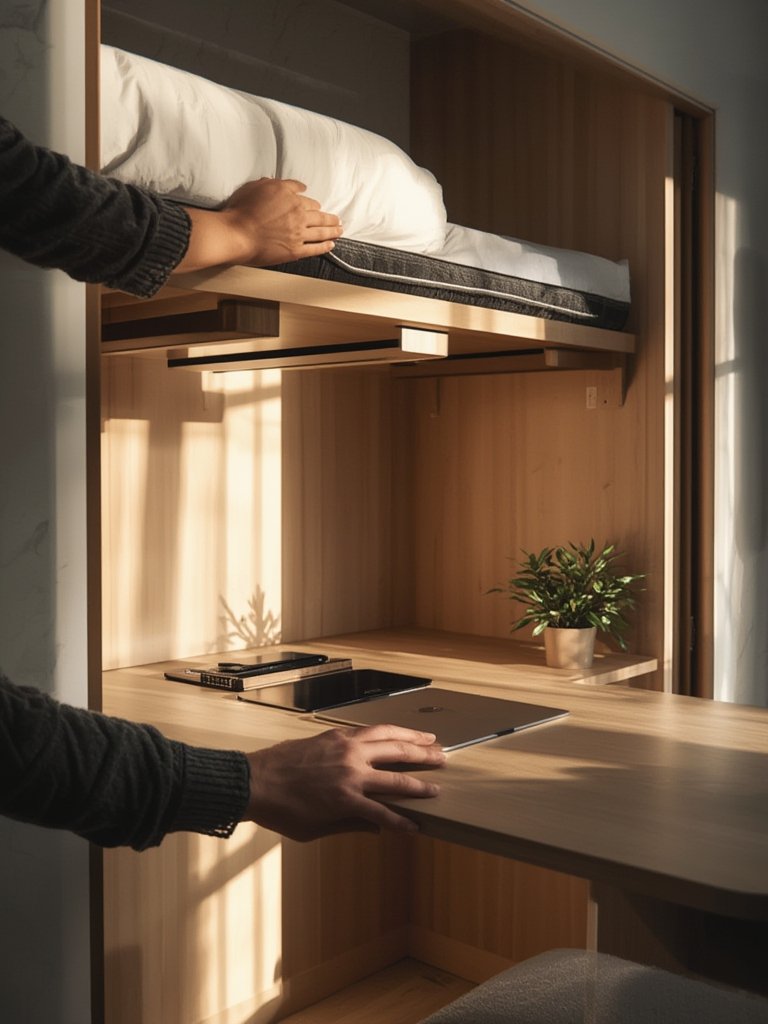
A Murphy bed with desk is a hybrid piece of furniture that combines a fold-down bed mechanism with a full-size workstation. When the bed is up, you have a usable desk surface for work or study. Lower the bed, and the desk stays level (or folds away), creating a comfortable sleeping area without needing additional space.

This design is increasingly popular in cities like New York, London, and Berlin, where apartment sizes are tight, and every square foot matters. The global Murphy bed market reached $1.57 billion in 2024, led by demand in North America and Europe.[source] Recent trends show more people transforming spare bedrooms into hybrid home offices and guest rooms—making a Murphy bed with desk a smart, modern choice.
Not only does it save valuable floor space, but it also keeps your area flexible. You can easily switch between modes without moving heavy furniture. If you’re inspired by multifunctional furniture for apartments, or seeking space-saving upgrades for small homes, a Murphy bed with desk can be a game changer.
How to Choose and Install a Murphy Bed with Desk: Step-by-Step
Getting the most from a Murphy bed with desk starts with choosing the right product, preparing your room, and assembling the unit correctly. Here’s a detailed guide to make sure your investment pays off.
Step 1: Assess Your Room & Select the Right Model
- Measure your ceiling height, free wall width, and room depth.
- If you have pets or need flexible storage, consider additional upgrades like compact pet furniture or hidden storage options alongside your Murphy bed desk combo.
- Double-check for obstructions: light fixtures, wall outlets, vents, and windows.
Step 2: Compare Product Features
- Pick a bed size that matches your needs (twin, full, or queen are most common).
- Look for mattress compatibility—Murphy beds often require thinner mattresses (usually 8–10 inches thick).
- Check desk surface size and stability. Is it large enough for your laptop and monitor?
- If possible, choose models with a sturdy steel or reinforced wood frame, especially for daily use.
- Compare total weight capacity, warranty length, and whether the hardware is included.
Step 3: Decide: DIY or Professional Installation?
- If you’re experienced with power tools and lifting, DIY kits are an option and can save money.
- For most, professional installation ensures safety and avoids common pitfalls such as uneven anchoring or misalignment.
Step 4: Prepare Space and Tools
- Clear the room and move existing desks, chairs, or other furniture.
- Have at least one helper—Murphy bed panels are bulky and sometimes heavy (150–300 lbs assembled).
- Gather all hardware, anchors, a power drill, stud finder, and level before starting.
Step 5: Assembly and Anchoring
- Follow the manufacturer’s instructions step by step. Don’t rush the assembly, especially the wall mount.
- Double-check every screw, bolt, and anchor; failure here can make the bed unsafe or unstable.
- After installation, test both the desk and bed mechanisms repeatedly to ensure everything locks and unlocks as designed.
- Add personal touches—organize your new desk with smart storage, or integrate a modern home decor accessory for extra style.
If you want more inspiration for maximizing comfort in tight quarters, see our guide to the best compact furniture for small rooms.
Advanced Analysis & Common Pitfalls
Murphy bed with desk combos are unbeatable for space efficiency, but there are real risks and often-overlooked issues to factor in before and after installation.
Major Pitfalls and Real-World Problems
- Size Surprises: Many buyers underestimate the depth and ceiling clearance needed. Always check how far the bed protrudes when open and how far the desk projects when folded down.
- Improper Anchoring: Failure to properly anchor a Murphy bed is a top safety hazard. This applies to both DIY and poorly executed pro setups. If the hardware isn’t fastened to a wall stud or suitable masonry, collapse can happen.
- Mattress Compatibility: Some beds allow only specific types or thicknesses of mattresses. Buying a plush or memory foam mattress that’s too thick will prevent the bed from closing or cause extra wear.
- Desk Stability: Lightweight or budget models may have less-stable desks that flex under pressure or wobble during typing.
- Hidden Expenses: Expect additional delivery or white-glove installation fees, especially for larger units. Shipping for a Murphy bed with desk can run over $250, and installation may be costly depending on local labor rates.
- Resale and Room Fit: Murphy beds can add value to urban homes but may limit how a room can be staged later. If future buyers prefer a traditional setup, this could be a sticking point. There aren’t documented case studies yet, but it’s an issue to keep in mind.
Quick Comparison Table: Key Features to Evaluate
| Feature | Entry-Level Murphy Bed with Desk | Mid-Range Model | Premium Model |
|---|---|---|---|
| Bed Size Options | Twin, Full | Full, Queen | Queen, Occasional King |
| Approximate Price | $1,000–$1,700 | $1,800–$2,800 | $3,000+ |
| Frame Material | Particleboard/Laminate | Solid Wood or Steel Reinforcement | All-Steel or Hardwood |
| Desk Size | Up to 36″ wide | Up to 48″ wide | 50″+ wide, adjustable |
| Weight Capacity | ~250 lbs | 300–450 lbs | 500+ lbs |
| Mattress Thickness | 8–10″ | 10–12″ | Up to 12″ |
| Warranty Length | 1 year | 2–5 years | 5–10+ years |
For durable, multi-functional options, it’s smart to follow expert tips for innovative multifunctional furniture and check out model-specific reviews.

Conclusion
Choosing a Murphy bed with desk can be one of the smartest upgrades for anyone looking to reclaim space without sacrificing comfort or function. From prepping your room to picking the right specs and professional installation, each step matters. Don’t underestimate measurement, anchoring, and ongoing maintenance. When planned well, your murphy bed with desk will deliver years of flexible use and style in any small space or modern apartment.
Ready to make the switch? Explore more space-saving furniture ideas, or see our detailed market research for deeper trends, and take the first step toward maximizing every square foot today.
FAQ
Can I use any mattress with a Murphy bed with desk?
No. Most Murphy beds with desks require a mattress that is 8 to 12 inches thick and relatively lightweight. Very thick or heavy mattresses may prevent the mechanism from closing properly or cause additional wear.
Can I install a Murphy bed with desk by myself?
Murphy bed with desk units can be installed by a competent DIYer with tools and some muscle, but it’s safest to have a helper (or hire a professional). Improper anchoring can be dangerous and may void the warranty.
How much space do I need to use a Murphy bed with desk?
You’ll need enough space for the bed to fully extend—typically 82 to 92 inches from the wall for a queen. Desk depth varies, but account for at least two feet of clearance in front of the closed unit.
Can a Murphy bed with desk increase my home’s value?
In urban markets where space is at a premium, a well-installed Murphy bed with desk may appeal to buyers seeking flexibility. However, it could limit staging possibilities for resale—plan accordingly.
What maintenance or care does a Murphy bed with desk require?
Regularly check and tighten hardware, lubricate hinges as needed, and avoid overloading the desk. If you move, carefully disassemble and re-anchor to avoid safety issues.