


Table of Contents
Air fryer vs oven is an everyday question for anyone who wants to save energy, reduce costs, and get crisp results at home. Whether you’re considering a switch, want to optimize your routine, or simply want honest, data-driven advice about which appliance comes out on top, this guide delivers the facts—and flags the pitfalls.
Key Takeaways
- Air fryers are more economical than ovens for small portions and short cooking times, but the reverse can be true for big meals or long cook sessions.
- Preheating, insulation, and recipe choice impact the true energy efficiency of both appliances—and the differences can surprise you.
- Switching from oven to air fryer for everyday meals may cut your yearly energy bill and carbon emissions, but not all scenarios see savings.
What Drives the Air Fryer vs Oven Debate?
The air fryer vs oven challenge is about more than just cooking technology. It’s about energy use, cost efficiency, meal quality, and sustainability in your kitchen. Both appliances now offer overlapping features—fast heating, convenience, multi-functionality—but the differences in their design and power consumption can have a big effect on your energy bills and results.
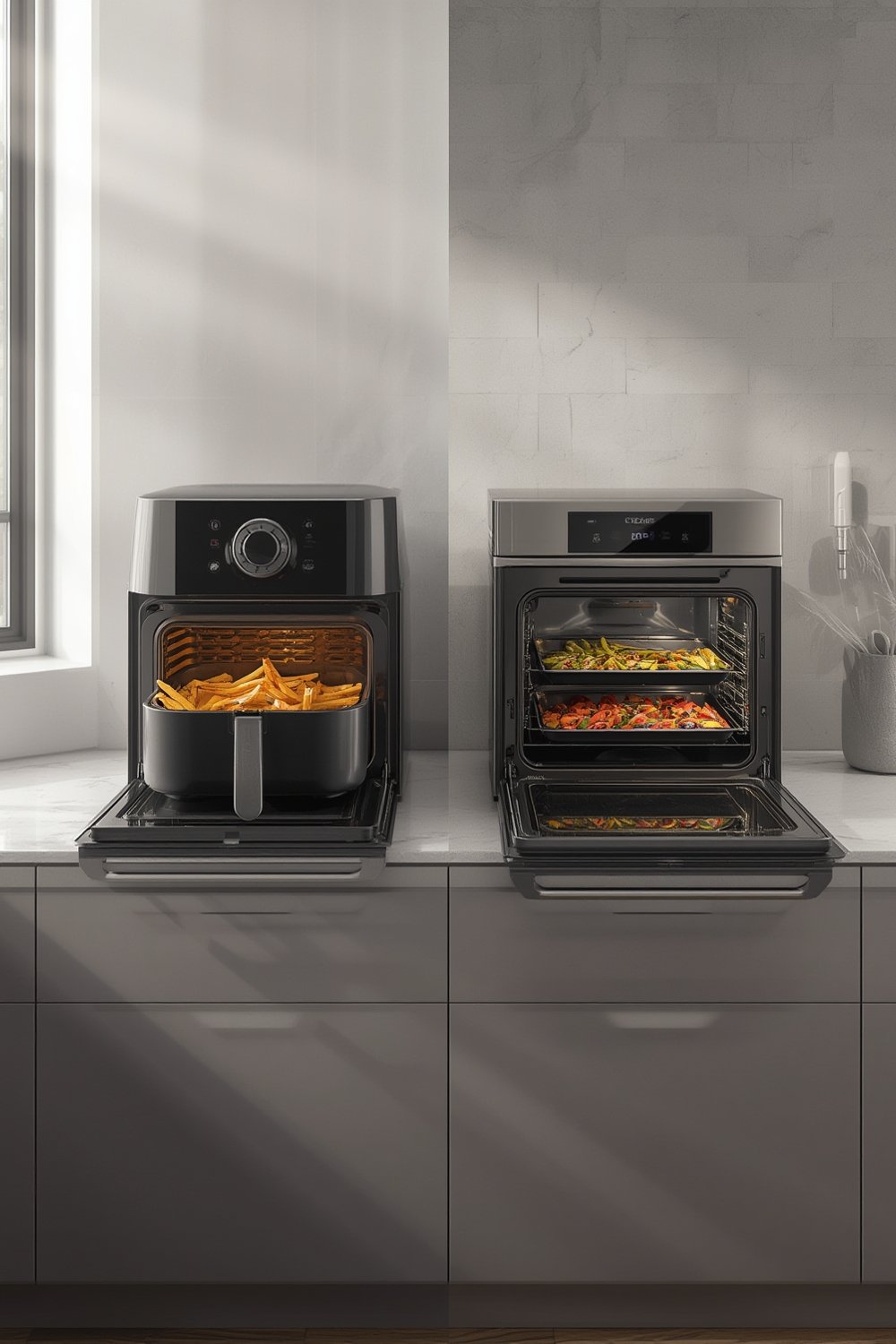
Ovens are powerful, large, and excel at batch cooking, baking, and roasting for crowds. Air fryers use a compact, super-heated airflow to deliver fast, crispy results, excelling with smaller batches. However, not every meal will be cheaper or faster in an air fryer, and certain family-sized recipes are better suited to an oven.
If you live in a small apartment or are looking for ways to keep your kitchen space efficient, these factors matter. In fact, optimizing your kitchen for multifunctionality is a key trend, as seen in our guide to space saving furniture for modern living.
How to Choose Smartly Between Air Fryer and Oven
Here’s a clear, actionable process to decide when to reach for your air fryer vs oven—and how to avoid energy waste in your home.
- Assess Meal Size and Frequency
Cooking one to four portions? The air fryer wins for efficiency. For anything larger, especially if you cook for 30+ minutes, the oven becomes competitive or superior for energy use. This is highlighted in the Consumer NZ analysis and corroborated by other lab tests.
- Consider Appliance Power and Recipe Time
Air fryers usually use 800–2,000 watts. Ovens range from 2,000–5,000 watts, but their superior insulation can make up for higher wattage over longer sessions. For quick 10-30 minute tasks, the air fryer is cheaper. For slow roasts or bakes, the oven pulls ahead.
- Account for Preheating and Warmup Losses
Ovens demand significant energy for preheating, especially older models. Air fryers generally skip or minimize warmup—but if you’re forced to run them for extended times (e.g., crispy roasted potatoes or baked goods), their energy use advantage drops.
- Factor in Carbon and Sustainability Goals
Air fryers typically generate less carbon per meal, especially in short, frequent cook sessions. If you’re trying to lower your carbon footprint, combining an air fryer with energy from renewable sources maximizes benefit. For more green living tips, see our eco-friendly furniture materials guide.
- Use Data to Track Appliance Cost
On average, a single-use air fryer costs about 11p, while a comparable oven session runs nearly 30p, according to GoCompare’s analysis. Scale your savings by how often you cook and batch accordingly.
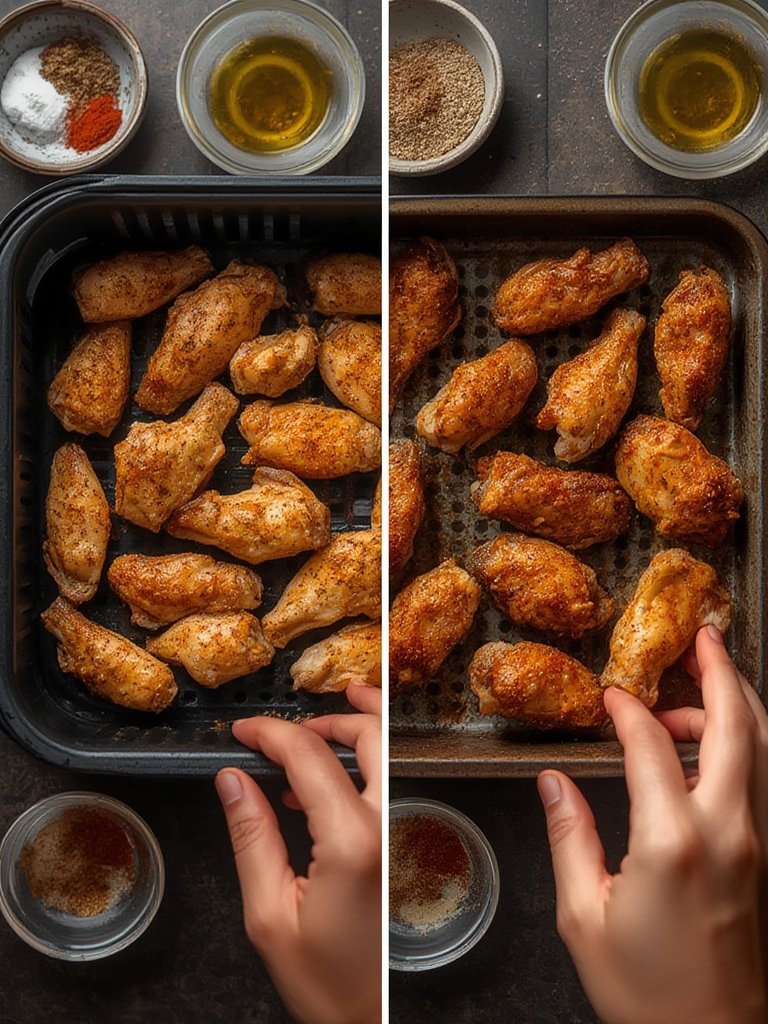
If you’re a meal-prepper, consider combining your approach: Use the oven for big bakes on weekends, then the air fryer for weeknight reheats or fast, small meals.
Finally, if you’re looking for other ways to optimize your kitchen efficiency, our guides to modern small kitchen design and energy efficient kitchen tools will help you take advantage of the latest gadgets and layouts.
Advanced Analysis: Pitfalls and Real-World Insights
Even with clear energy data, the air fryer vs oven choice has some surprising caveats. Relying only on marketing promises or assuming the air fryer is always more efficient can backfire. Here are key issues to watch out for—based on real-life test data and research.
| Scenario | More Economical Appliance |
|---|---|
| Small quantities, less than 30 minutes | Air fryer |
| Large quantities, more than 30 minutes | Oven |
Evidence from Grease Lightning and lab studies shows that if you repeatedly run your air fryer at high temperatures or for long periods (beyond 30 minutes), any initial cost advantage disappears. Some tests even found air fryers less efficient than ovens for certain multiple small batches, due to their smaller capacity and less robust insulation (source).
- Missed Savings on Batches:
If you have to cook multiple small batches in the air fryer to feed a family, the combined energy usage can rival or exceed that of a single oven session.
- Preheating Roulette:
Ovens may require lengthy preheating, which can be wasteful—especially if you forget and leave them running. Air fryers heat up fast and are less risky for energy waste, but some complex recipes (like baked cakes) still require preheating for best texture.
- Insulation Factor:
Ovens with good door seals and thermostats outperform older, leaky models. Air fryers may lose efficiency at extreme heat or for extra-long cook times because their insulation is thinner.
- Carbon Advantage Nuance:
While switching to an air fryer may reduce your carbon footprint for day-to-day meals, the absolute difference may be minor without renewable energy at home. For a broader look at sustainability, don’t miss our tips on affordable home improvement ideas.

Lab testing by InfluxData found that in cooking fries, an air fryer used 96.6 Wh in 10 minutes (about 9.66 Wh/min), while an oven used 206 Wh in 32 minutes (about 6.44 Wh/min)—but total oven energy, including preheating, still lagged behind the air fryer by 150 Wh for that task. See InfluxData’s empirical tests for details.
There are also research gaps worth noting: Data on maintenance costs, appliance lifespan, or detailed carbon metrics is limited. User complaints and health questions currently lack robust, published data. For now, focus on energy use, flexibility, and meal size when comparing air fryer vs oven options.
Cooking efficiency is about more than just your main appliances. If you’re moving into a smaller apartment or want smarter kitchen routines, check out our small apartment makeover guide for additional energy-saving strategies.
Conclusion: Should You Go Air Fryer or Stick with Oven?
The best choice in the air fryer vs oven debate depends on what and how you cook. For most small, quick meals, the air fryer will save you money and energy. For batch cooking, baking, or anything that runs for over 30 minutes, a modern oven closes the gap—and may even become more efficient.
Bottom line: Use the air fryer for speed and solo meals. Rely on the oven for volume, even cooking, and recipes that truly need preheating and space.
Ready to optimize your kitchen and lower your bills? Weigh your options, experiment with usage patterns, and revisit this air fryer vs oven guide often. Still hungry for more tips? See our dedicated air fryer recipes or get started with air fryer for beginners to make every cook session count.
FAQ: Air Fryer vs Oven – What You Need to Know
Is an air fryer cheaper to run than an oven?
For small portions and quick meals, yes—the air fryer is usually cheaper. For large batches or anything that cooks for more than 30 minutes, a good oven can match or surpass the air fryer in efficiency.
Does an air fryer use less electricity than an oven?
Typically yes, the air fryer draws less power per minute. However, actual savings depend on how long you run each device, the recipe, and how many batches you need to cook.
Can you cook everything in an air fryer that you’d cook in an oven?
No. Air fryers excel at crisping and quick roasting, but they struggle with oversized casseroles, baking large cakes, or recipes that need even, gentle heat over long periods. For best results, match the appliance to the recipe type.
Are the savings significant over a year if I switch to an air fryer?
Yes—especially if you routinely use the oven for small meals. Annual savings can range from £50–£100, depending on usage and energy rates. Your results may vary with cook style and appliance models.
Where can I learn more about energy-efficient kitchen appliances?
Check out our in-depth guide to energy efficient kitchen tools and discover more energy-saving appliance strategies.