


Table of Contents
Pet Essentials for Small Homes: Smart Ways to Maximize Comfort
Pet essentials for small homes are the foundation of a peaceful, organized, and pet-friendly living space. Limited square footage doesn’t mean you have to compromise on comfort, enrichment, or cleanliness. With thoughtful product choices and smart layouts, pets can thrive in apartments, condos, and compact houses just as happily as in larger homes.
In small living spaces, every item matters. Oversized pet gear can quickly overwhelm a room, create clutter, and increase stress for both pets and owners. The solution lies in choosing multifunctional, space-efficient essentials that blend seamlessly into your home while still meeting your pet’s physical and emotional needs.
This guide covers everything you need to know about pet essentials for small homes—from furniture and feeding solutions to cleaning tools, enrichment toys, and daily routines—so you can create a calm, comfortable environment where both you and your pet can flourish.
These strategies align well with small apartment organization ideas.
What Are Pet Essentials for Small Homes & Why They Matter
Pet essentials for small homes are thoughtfully designed products, layouts, and routines that support pet well-being without consuming unnecessary space. These essentials prioritize compact sizing, foldable or multi-use designs, vertical storage, and easy maintenance.
In small homes, clutter and chaos build quickly. A poorly placed litter box, oversized crate, or scattered toys can make a space feel cramped and stressful. For pets, this lack of structure may lead to anxiety, boredom, or destructive behavior.
Choosing the right essentials ensures:
- Pets feel secure and stimulated
- Owners maintain a clean, organized home
- Shared spaces function efficiently
- Pet items integrate naturally into home décor
Ultimately, smart essentials help small homes feel balanced—not overcrowded.
Benefits of Choosing the Right Pet Essentials for Small Homes
Maximized Comfort in Limited Space
Pets have dedicated areas to rest, play, and eat without disrupting daily living.
Reduced Visual Clutter
Multi-functional and concealed pet furniture keeps rooms looking tidy.
Improved Hygiene and Odor Control
Compact, efficient cleaning tools prevent odors from spreading.
Lower Stress for Pets
Clear routines and defined zones help pets feel safe and relaxed.
Better Owner–Pet Harmony
A well-organized environment supports smoother daily routines.
Selecting the Right Pet for Small Living Spaces
Before buying supplies, it’s important to consider whether your pet is suited to compact living.
Cats
Cats are excellent companions for small homes. They naturally adapt to vertical environments and enjoy climbing, perching, and observing from above. Shelves, window hammocks, and cat trees replace the need for large floor areas.
Small Dog Breeds
Many small and medium-low-energy breeds adapt well to apartment life. Examples include:
- French Bulldogs
- Dachshunds
- Pugs
- Cavalier King Charles Spaniels
These dogs thrive with structured walks, indoor play, and mental enrichment rather than constant outdoor space.
Small Mammals
Rabbits, hamsters, guinea pigs, and ferrets do well in compact homes when provided with vertical, multi-level habitats and daily interaction.
Avoid pets that require:
- Large roaming areas
- Constant outdoor access
- High levels of physical stimulation indoors
Essential Pet Furniture for Small Homes
Modern Foldable Crates
Traditional crates take up valuable floor space. Modern foldable crates solve this problem by offering a secure den for pets while folding flat when not in use.
Benefits include:
- Easy storage under beds or sofas
- Dual use as travel crates
- Minimal visual impact
Some models even resemble furniture, blending into living rooms or bedrooms.
Multi-Functional Pet Furniture
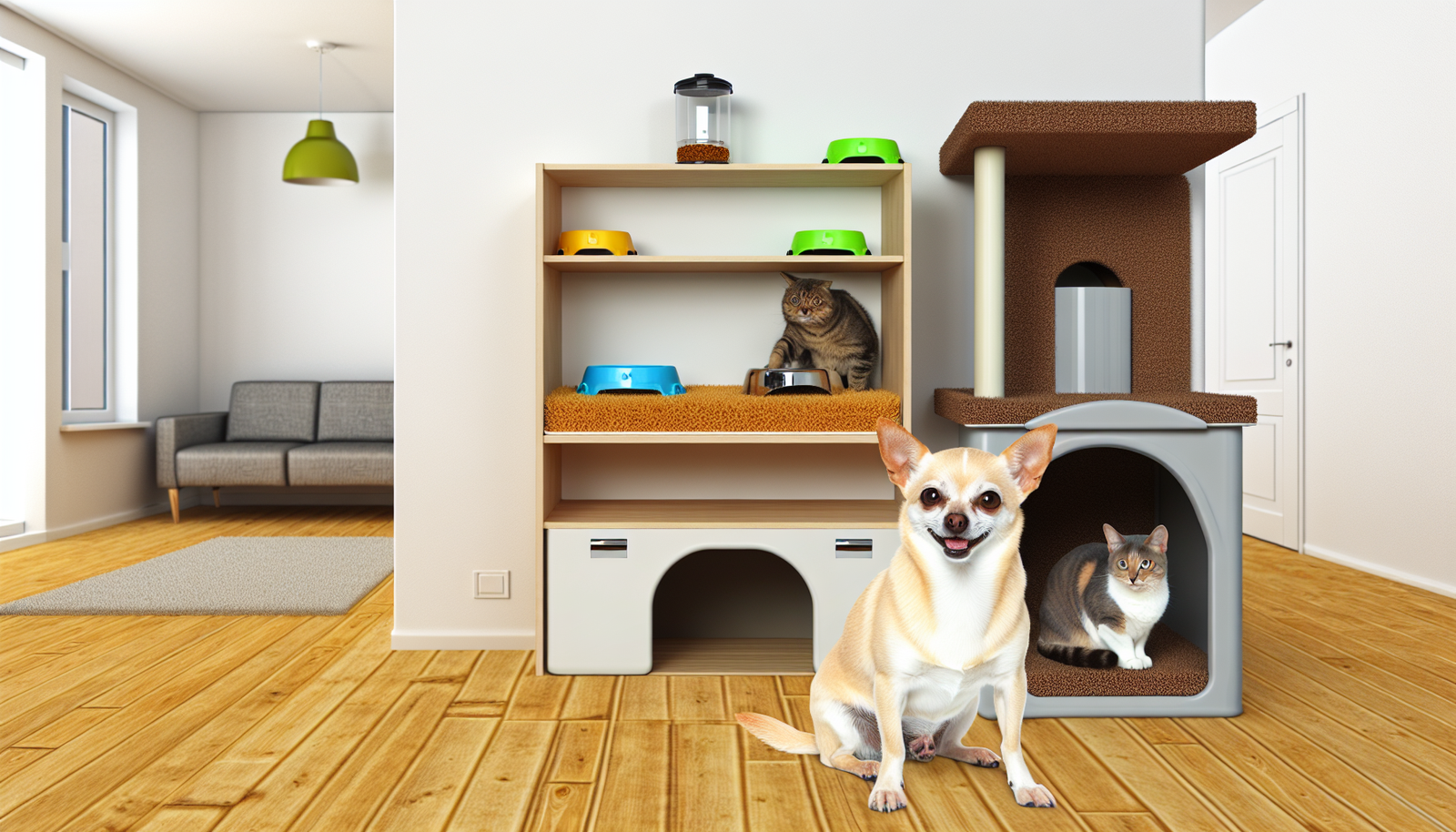
Space-saving furniture is one of the most important pet essentials for small homes.
Popular options include:
- Ottomans with hidden pet beds
- Side tables that double as cat dens
- Benches with built-in feeding stations
These pieces eliminate the need for separate pet beds while maintaining a cohesive interior design.
Many of these solutions mirror space-saving furniture ideas for compact homes
Compact Feeding Stations
Feeding areas often create clutter in small kitchens or living rooms. Compact solutions help keep floors clear and routines organized.
Smart feeding options:
- Wall-mounted bowls
- Elevated feeders with storage
- Stackable feeding stations
These designs reduce mess and improve posture for pets.
Creating Comfort Zones Without Wasting Space
Small homes benefit from clearly defined pet zones.
Rest Zones
Pets need quiet, predictable spaces to relax. Ideal locations include:
- Under tables or desks
- Beside sofas
- Near windows for cats
Enclosed beds or furniture-style dens provide a sense of security.
Play and Activity Zones
Instead of scattering toys across rooms, confine play items to one area.
Effective solutions:
- Compact, portable scratchers for cats
- Foldable tunnels or soft toys
- Toy baskets stored under furniture
This keeps stimulation high while clutter stays low.
Why Zoning Matters
- Reduces anxiety
- Encourages calm behavior
- Simplifies cleaning
- Creates structure in shared spaces
Enrichment Essentials for Indoor Pets
Mental stimulation is just as important as physical activity—especially in small homes.
Interactive Toys
Puzzle toys and feeders prevent boredom and destructive habits.
Highly effective options include:
- Treat-dispensing puzzles
- Snuffle mats
- Interactive balls
These toys keep pets engaged without requiring open space.
Vertical Enrichment (Especially for Cats)
Wall shelves, window perches, and climbing posts expand usable space upward instead of outward.
Vertical enrichment:
- Encourages natural behaviors
- Reduces territorial stress
- Increases exercise without floor space
Cleaning and Hygiene Essentials for Small Homes
Cleanliness is non-negotiable in compact spaces.
Compact Cleaning Tools
A compact yet powerful vacuum cleaner designed for pet hair is one of the most valuable investments for small homes.
Look for:
- Strong suction
- HEPA filtration
- Lightweight design
- Easy storage
Litter and Waste Management
For cats, litter placement is critical.
Best practices:
- Covered or furniture-style litter boxes
- Low-dust litter
- Litter-catching mats
For dogs, indoor potty solutions should be compact, washable, and well-ventilated.
Grooming Routines
Regular grooming drastically reduces mess.
Simple habits:
- Brush pets weekly (or more)
- Wipe paws after walks
- Wash bedding weekly
Training Tips for Pets in Small Homes
Positive Reinforcement
Reward-based training builds trust and reduces anxiety behaviors common in confined environments.
Short, Consistent Sessions
Brief daily training sessions reinforce calm indoor behavior without overwhelming pets.
Focus on:
- “Place”
- “Stay”
- Quiet commands
Routine Is Everything
Predictable feeding, play, and rest schedules help pets feel secure in small spaces.
Common Mistakes to Avoid
- Overbuying pet products
- Ignoring vertical space
- Allowing toys to spread across rooms
- Skipping grooming routines
- Using oversized furniture
Avoiding these mistakes keeps small homes functional and peaceful.
Expert Tips for Living With Pets in Small Homes
- Choose furniture with built-in pet functions
- Rotate toys instead of storing all at once
- Store supplies under beds or sofas
- Wash pet fabrics weekly
- Maintain consistent routines
Small changes make a big difference.
❓ FAQs About Pet Essentials for Small Homes
What are the best pet essentials for small homes?
Multi-functional furniture, compact feeding stations, vertical enrichment tools, and efficient cleaning supplies.
Can pets live comfortably in apartments?
Yes, with proper gear, routines, and enrichment, pets thrive in small spaces.
How do I control pet odor in a small home?
Frequent cleaning, grooming, washable fabrics, and air purifiers help significantly.
Are cats or dogs better for small homes?
Both can adapt, but cats and small dog breeds are generally easier in limited space.
Do pets need enrichment indoors?
Absolutely. Mental stimulation prevents stress and destructive behavior.
✅ Conclusion
Creating a harmonious living environment with pets doesn’t require extra square footage—it requires smarter choices. By investing in the right pet essentials for small homes, you can balance comfort, cleanliness, and enrichment without sacrificing style or space.
From foldable furniture and compact scratchers to interactive toys and efficient cleaning tools, thoughtful planning allows pets and owners to thrive together in even the smallest homes. With the right setup, small-space living becomes calm, functional, and deeply rewarding for everyone involved.

[…] your kitchen is tight on space, see our recommendation for compact pet essentials—these multitaskers are just as handy as an air fryer for beginners in a small home or […]