


Table of Contents
Induction cooking benefits are rapidly changing how people think about daily meal prep, household energy bills, and home safety. If you’re still on the fence about switching from gas or electric to induction, here’s what you need to know based on new 2023–2024 data: induction is faster, safer, cleaner, and more efficient than almost any other modern cooking method. In this straight-talking guide, you’ll get real numbers, clear steps, and honest pitfalls so you can decide if induction is right for your home.
Key Takeaways
- Induction cooking delivers 84–87% energy efficiency—over double that of gas cooktops, which top out at 32–40%.
- Switching to induction greatly reduces indoor air pollution and speeds up cook times, but may require buying new compatible cookware.
- Despite higher upfront cost, the long-term savings and safety improvements make induction a compelling upgrade for most homes.
Understanding Induction Cooking Benefits
Induction cooking uses electromagnetic energy to directly heat cookware, efficiently converting electricity into heat right where it’s needed—your pan. Unlike gas, which burns fuel and loses up to 60% of energy to the air, induction delivers heat instantly and with minimal waste.

The science is straightforward: when you place a pan with a ferrous (magnetic) base on the cooktop, an oscillating magnetic field creates heat directly within the metal. There are no open flames, no combustion, and little to no radiant heat lost to the surrounding room. This means induction is not just more environmentally friendly but also safer, since the glass surface stays relatively cool compared to glowing coils or open gas burners.
So why does this matter for the average household? Recent research found induction cooktops achieve up to 87% efficiency compared with just 32–40% for gas, which translates directly to lower utility bills and a smaller carbon footprint. It’s also an increasingly important consideration for anyone upgrading a small kitchen for maximum performance. For tips on optimizing compact kitchen layouts, see these modern small kitchen design ideas.
How to Make the Switch: Practical Steps
Transitioning to induction doesn’t have to be complicated. Here’s how to plan and implement your switch for maximum benefit (and minimum stress):
- Evaluate Your Current Cookware
Not all pots and pans will work on induction. Simply check if a magnet sticks to the bottom of your pan—if yes, it’s compatible. If not, you may need to invest in new, ferrous-based cookware. This upfront step can save you time and frustration later. - Assess Power and Installation Requirements
Induction ranges often require a 240-volt outlet. While portable induction burners use a standard outlet, a full cooktop or range may need electrical work. Always consult a qualified electrician for safety. - Choose the Right Induction Model
Decide between a built-in cooktop, slide-in range, or portable induction burner. Consider your cooking habits, kitchen space, and budget. Look for units with child locks, power boost, and easy-clean glass. - Plan for Recycling or Replacing Existing Appliances
If replacing a gas stove, coordinate with your gas company for safe removal and capping off the gas line. Some municipalities offer appliance recycling programs. - Embrace the Learning Curve
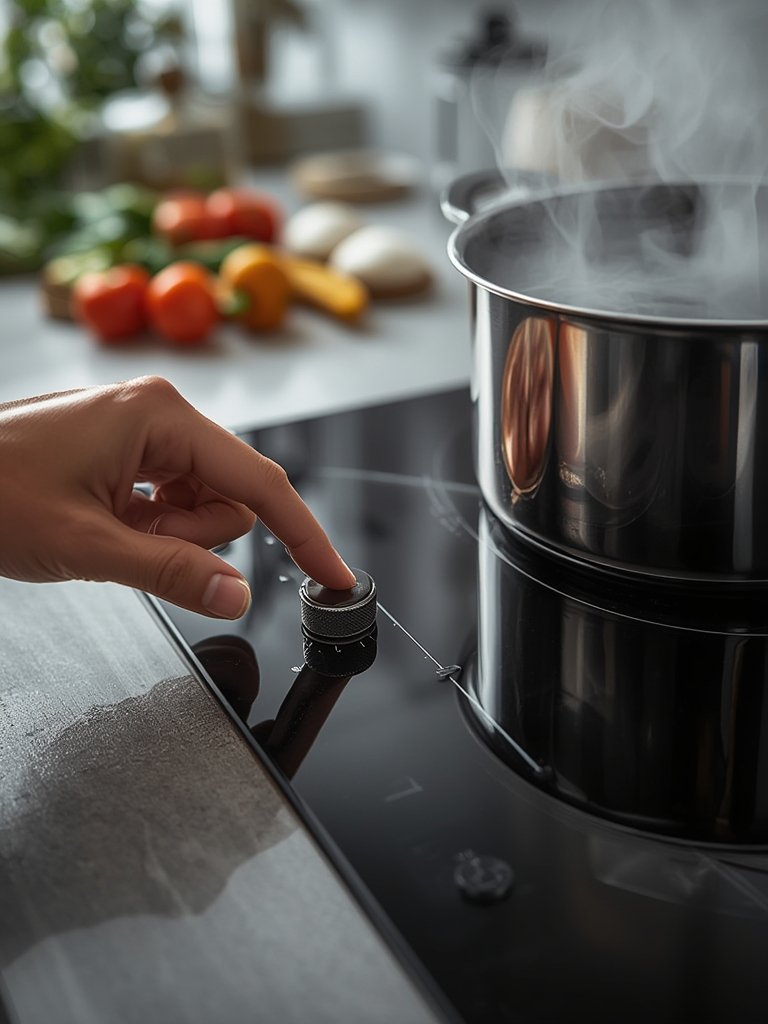
Induction responds instantly, so temperatures adjust much faster than with gas. Practice with basic dishes to get a feel for rapid changes in heat, and always use flat-bottomed pans for best results.
Want to go further in making your kitchen not just energy-efficient but also organized? Check out practical small kitchen storage ideas to maximize space with your new induction setup. For eco-focused upgrades, explore sustainable kitchen products for greener cooking beyond the stove itself.
Advanced Analysis and Common Pitfalls
While the advantages of induction cooking benefits are substantial, it’s important to look at common snags and how they compare with gas and traditional electric stoves.
| Factor | Induction Cooking | Gas Cooking |
|---|---|---|
| Energy Efficiency | 84–87% (net 39.9–47.9% considering grid loss) | 32–40% (about 40% after gas burn losses) |
| Air Quality | No combustion gases, NO2 reduced by 56% | Emits NO2 & CO; linked to 13% of childhood asthma cases (source) |
| Cooking Speed | Boils water in 5.8 seconds (2–4 min faster per six quarts) | Boils water in 8.3 seconds |
| Temperature Control | Instant, precise, rapid response | Slower to heat or cool; less precise |
| Required Cookware | Must be induction compatible (ferrous base) | Any cookware |
| Upfront Cost | Generally higher; compatible cookware may add expense | Lower, but health costs and inefficiency add over time |
| Safety | No open flame; surface cools quickly | Fire risk, hot surfaces, gas leaks possible |
Realistic Pitfalls to Watch For:
- Cookware Compatibility: If your current pots are non-magnetic, you’ll need to budget for new pans—this is the most common frustration for new induction users.
- Installation Complexity: Older homes may not have a 240V outlet, so new wiring may be needed, adding cost.
- User Learning Curve: Precise, rapid heating is an adjustment—careless use can scorch food quickly, or boil-overs can happen until you get the hang of it.
- Market Perceptions: A 2024 study found over 60% of households overestimate their current cooktop’s efficiency, often delaying beneficial upgrades (see survey).
- Incentives & Policy: There’s excitement around induction, but as of 2024, government rebates are rare in the US, EU, or Asia (DOE).
Despite these hurdles, induction’s environmental impact is much lower: using up to 60% less primary energy per meal and emitting less than a third of the CO2 of a gas range per lab analysis. Want an energy-efficient kitchen all around? Discover more energy efficient kitchen appliances to pair with your new induction cooktop.

For even bigger home improvements on a budget, see affordable home upgrade tips.
Conclusion: Should You Switch to Induction?
The verdict is clear: for most households, induction cooking benefits far outpace the downsides. With state-of-the-art efficiency, dramatically improved indoor air quality, and rapid cooking speeds, induction is the gold standard for anyone modernizing their kitchen. The upfront costs and cookware changes are manageable for most, especially when measured over years of savings on energy and health. If you’re ready to experience safe, sustainable, and powerful cooking at home, don’t wait—start exploring induction today. For next steps and more kitchen inspiration, explore how to create a modern home decor theme that matches your new setup.
Frequently Asked Questions
Does induction cooking save money in the long run?
Yes, induction cooking typically results in lower electricity bills thanks to its superior efficiency (over double that of gas), and reduced heat loss means less spending on kitchen cooling in summer months.
Are there any health risks with induction compared to gas stoves?
Induction emits no combustion gases and eliminates exposure to harmful pollutants like NO2 and CO that come with gas cooking. Studies show a clear benefit for respiratory health, especially for children.
Will I need to replace all my cookware?
Only pots and pans with a magnetic (ferrous) base will work on induction. If a magnet sticks to the bottom, it’s good to go. If not, you’ll need to invest in new cookware, but this is a one-time cost.
How do induction cooktops impact kitchen safety?
There’s no open flame, and the cooktop itself remains cool to the touch (except under a hot pan). This greatly reduces the risk of burns and eliminates fire hazards from gas leaks, making induction one of the safest cooking options.
Are there incentives or rebates for induction stoves in 2024?
As of 2024, there are few government rebates or financial incentives in major markets for induction. However, consumer demand is rising thanks to energy and health benefits, and programs may expand in the coming years.