


Table of Contents
### Blog Post:
Healthy cooking gadgets are transforming kitchens around the world by making nutritious meals simpler, faster, and more enjoyable to prepare. As more people seek to cut back on oil, reduce processed foods, and support healthy lifestyles, the right tools can genuinely change daily eating habits. But which gadgets actually make a difference—and what are the realities beyond the hype?
Key Takeaways
- The healthy cooking gadgets market is booming, with global revenues projected to triple by 2032, especially in Asia Pacific, North America, and Europe.
- Common pain points like unclear health benefits, missing technical specs, and integration struggles make choosing the right gadget challenging.
- Practical selection and use strategies—combined with an honest look at limitations—are crucial for lasting results and a healthier kitchen routine.
What Are Healthy Cooking Gadgets and Why Do They Matter?
Healthy cooking gadgets are kitchen tools and appliances designed to make preparing nutritious meals easier while supporting goals like lower oil use, reduced fat, and less processed food. Popular examples include air fryers, steam ovens, induction cooktops, high-speed blenders, and programmable pressure cookers.
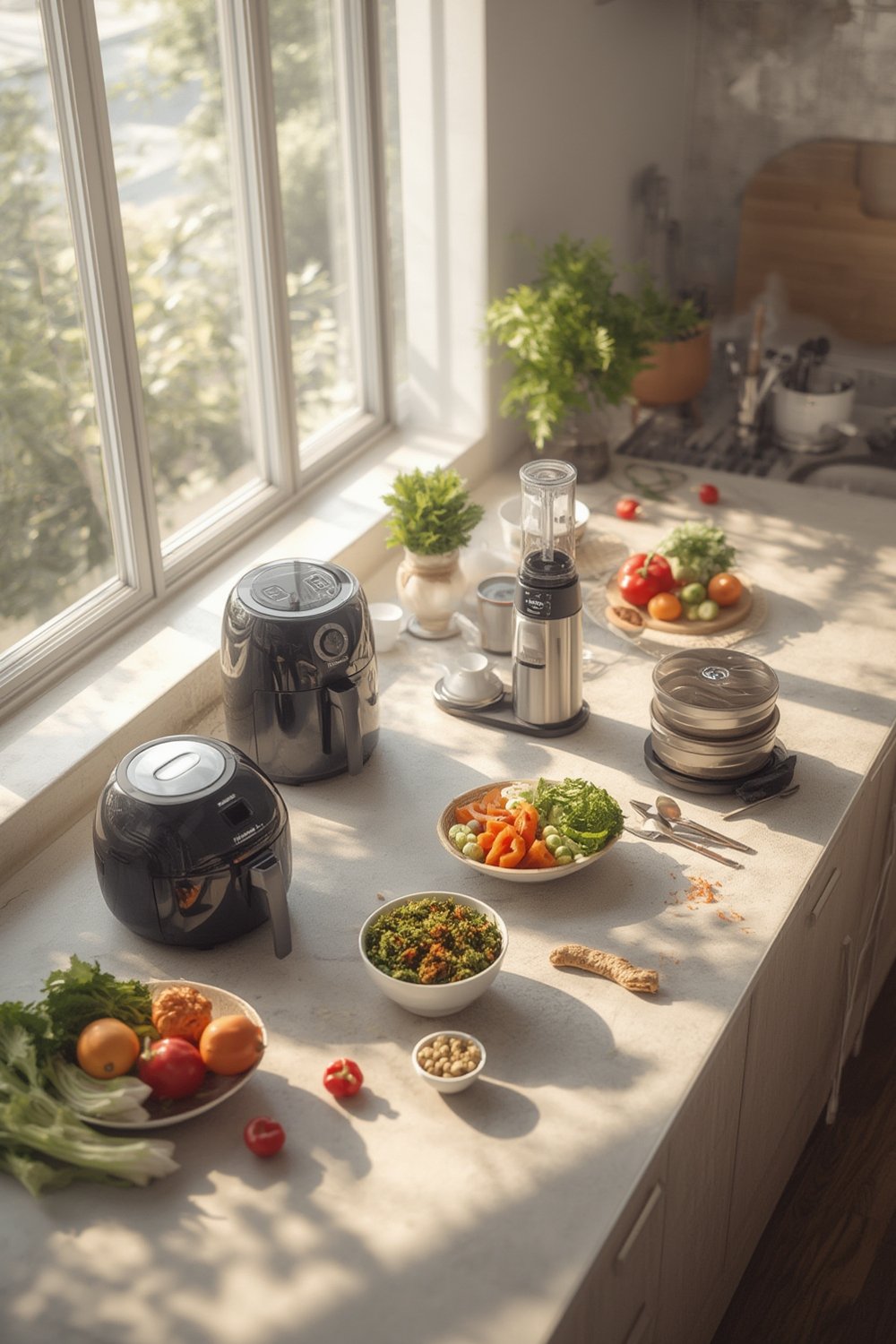
The global market for these gadgets is enormous and growing fast: in 2023-2024, the smart kitchen gadgets segment alone was valued at USD 18-22 billion, with forecasts estimating it could reach $45-63 billion by 2032 [source]. Regional growth is highest in the Asia Pacific, where urbanization and technology adoption are fueling demand, boosted by middle-class expansion and e-commerce trends [source].
But why do healthy cooking gadgets matter in your kitchen? They make it easier to:
- Use less oil and fat while keeping texture and flavor
- Cook faster, freeing up time for busy lifestyles
- Experiment with new healthy recipes and home meal prep
- Embrace modular and smart cooking with app or voice control
While the promise is real, selecting the right gadget and using it consistently is what makes the difference for real health outcomes.
For inspiration on organizing your kitchen, see our small kitchen storage ideas guide.
How to Choose and Use Healthy Cooking Gadgets in Your Kitchen: A Step-by-Step Guide
Selecting healthy cooking gadgets that actually fit your priorities can be overwhelming. Here’s a practical step-by-step guide:
- Define your healthy cooking goals.
Ask yourself: Is your priority reducing oil? Cutting prep time? Boosting veggies? Understanding this will filter your gadget shortlist. - Compare real technical specifications.
Check wattage, cooking capacity, number of programs, and app integration before buying. Don’t just look at brand names—read spec sheets closely.
For example, an air fryer for a family should have at least 5-liter capacity and 1500W+ for true versatility and speed.
For more on smart appliances, see our smart kitchen appliances guide. - Review energy efficiency ratings.
Healthy gadgets often use less energy than traditional ovens or stovetops—check for Energy Star or comparable certifications.
Our energy efficient kitchen tools guide offers a focused look at this. - Estimate true costs—including maintenance and accessories.
Factor in potential extra trays, filters, or cleaning cycles. For example, air fryer baskets often need replacement after heavy use; steam ovens require descaling tablets. Don’t forget to check prices for these add-ons.
See: best kitchen trash cans for efficient cleanup ideas. - Read unbiased user reviews, not just ‘top ten’ lists.
Dig into what real owners say about reliability, ease of cleaning, and long-term satisfaction. Forums often give a clearer view than retailer sites alone.
A good place to start? See our honest take on air fryer for beginners. - Plan your kitchen layout mindfully.
Take measurements: Can that new appliance fit under your cabinets when the lid is open? Will it block essential prep areas?
For modern kitchen inspiration, tour our modern small kitchen design guide. - Try simple recipes first.
Start with basics: roasted veggies in an air fryer, steamed fish in a smart oven, or homemade soup in a programmable blender. Give the gadget a chance to prove its core value before overcomplicating things.
If you’re not getting the promised results, double-check your default settings or browse user communities for troubleshooting.
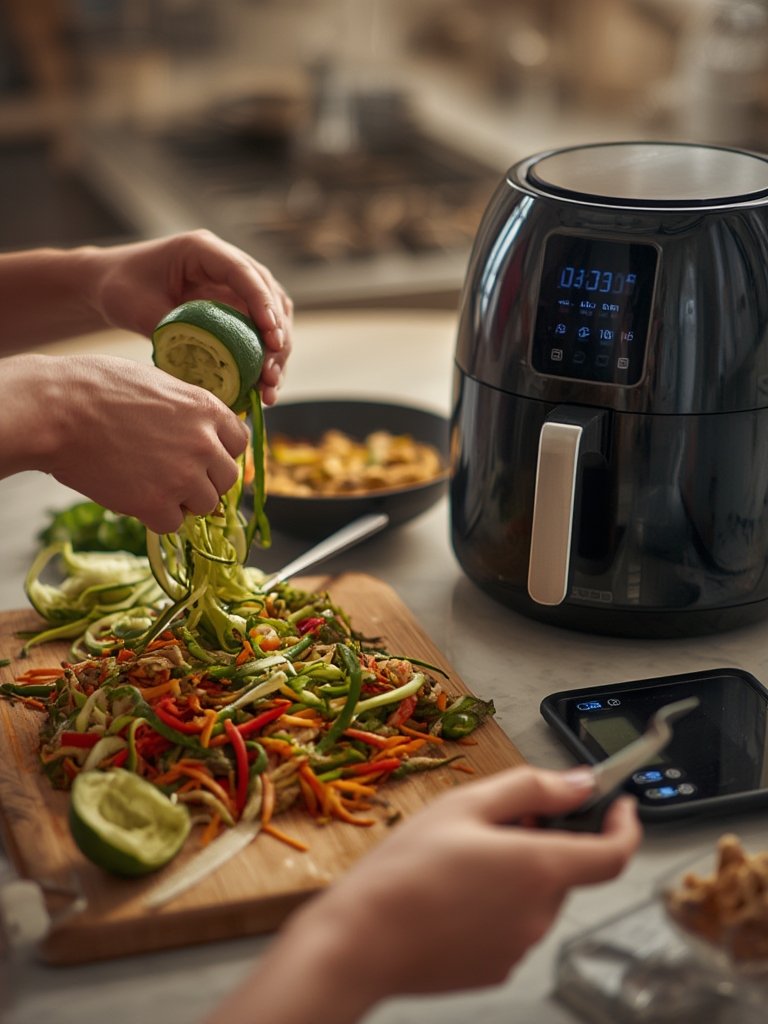
Finally, reward yourself for sticking with new routines: streamlined meals with less oil and salt can be genuinely satisfying—both for your body and schedule.
Advanced Analysis & Common Pitfalls
Based on available 2024 research, here’s where most users run into trouble with healthy cooking gadgets:
- Lack of detailed product specs: Many “healthy” gadgets hide technical details, making apples-to-apples comparison tough. Don’t assume a trendy tool will work for your household size or typical ingredients.
- Underwhelming results for some foods: Air fryers work miracles on potatoes and chicken but may disappoint for baked goods or denser items.
- Questionable health impact claims: There are few rigorous scientific studies that prove measurable benefits, such as reduced disease risk, from using specific low-oil gadgets alone. Most improvements come from overall dietary changes and consistent use.
- Extra maintenance and hidden costs: Replacement filters, trays, or cleaning solutions may be necessary every 6-12 months. This is rarely highlighted upfront.
- Integration into daily habit is hard: Users often buy gadgets, use them for a month, then return to old methods due to habit, messy storage, or slow cleaning routines.
| Pitfall | What to Watch For | Actionable Solution |
|---|---|---|
| Overpromising marketing | Gadgets that claim to “replace all appliances” or guarantee dramatic health changes | Look for products with clear, modest claims and proven reviews over 12+ months of use |
| Undersized gadgets | An air fryer too small for family meals | Check litre/quart capacity, and if in doubt, go up a size |
| Cleaning hassle | Difficult-to-disassemble parts or non-dishwasher-safe components | Cleaning hassle |
| Lack of recipes & user support | Sparse instructions; vague preset names | Choose brands with active online communities and robust recipe books |
| Integration failure | New gadget remains in the cupboard after a month | Designate space on your counter; build routines (e.g., “Air fryer Sundays”) |

For more on optimizing your home for efficiency and sticking to new habits, explore simple home improvement projects.
Conclusion & Next Steps
The path to smarter, healthier meals starts with choosing healthy cooking gadgets that fit your goals and lifestyle—not just the latest viral trends. Focus on clear specifications, honest reviews, and solutions to practical challenges like cleaning and storage.
Remember, gadgets are only as useful as the habits you build around them. By following the steps above and being realistic about common pitfalls, you’ll get much more value and enjoyment from your investment in healthy cooking gadgets.
Ready to upgrade your kitchen efficiency or organization even further? Check out our in-depth guides on energy efficient kitchen appliances and meal prep kitchen tools. Take control, try one new gadget at a time, and discover how the right tools can truly simplify and improve your healthy routine.
FAQ: Healthy Cooking Gadgets
Are healthy cooking gadgets really worth the investment?
For many people, yes. They save time, reduce oil use, and often make healthy meals more accessible. However, being honest about your habits and kitchen space is key to avoiding underused “appliance graveyards.”
How much should I spend on a quality healthy cooking gadget in 2024?
Entry-level air fryers start at $50–$100, but large smart ovens or induction cooktops can run $300–$1200+. Always check for hidden costs like replacement baskets or filters before buying.
Do healthy cooking gadgets help with meal prep for busy families?
Absolutely. Features like programmable timers, multi-tray capacity, and fast heating streamline batch-cooking and make weekday meals simpler. Check out our guide for more strategies.
Will using less oil from gadgets like air fryers make me healthier?
Less oil usually means lower calories and fat per meal, which can support heart health and weight goals. However, overall diet and portion size matter too—no gadget is a magic cure.
What’s the biggest mistake buyers make with healthy cooking gadgets?
Buying the wrong size for their household or lacking a plan to use the tool regularly. Reading technical specs, reviews, and planning storage helps avoid wasted money and frustration.