


Key Takeaways
- Choosing the right outdoor kitchen waterproof TV means looking beyond “weatherproof”—focus on brightness, anti-glare, and proper installation for all-season use.
- Many guides skip crucial details about maintenance, pairing with cabinetry, and storing or protecting your setup during harsh weather or winter months.
- Real-world data show rapid technology improvements, but getting long-term value depends on attention to safety, compatibility, and ongoing care.
The Core Concept: Outdoor Kitchen Waterproof TV Demystified
An outdoor kitchen waterproof TV isn’t just a TV in a rugged shell. Unlike standard indoor models, these displays are purpose-built to survive rain, wind, sun, and wide temperature swings. They typically come with high-brightness displays—often between 1000 to 1500 nits—and weather-sealed (IP-rated) housings that stop water and dust.
The reason behind the investment is clear: you want seamless entertainment while grilling, dining, or hosting friends outdoors—no matter the weather. For most homeowners, durability and weather-resistance are leading factors, as highlighted in recent industry research. The best outdoor TVs can last for years if chosen and installed smartly.
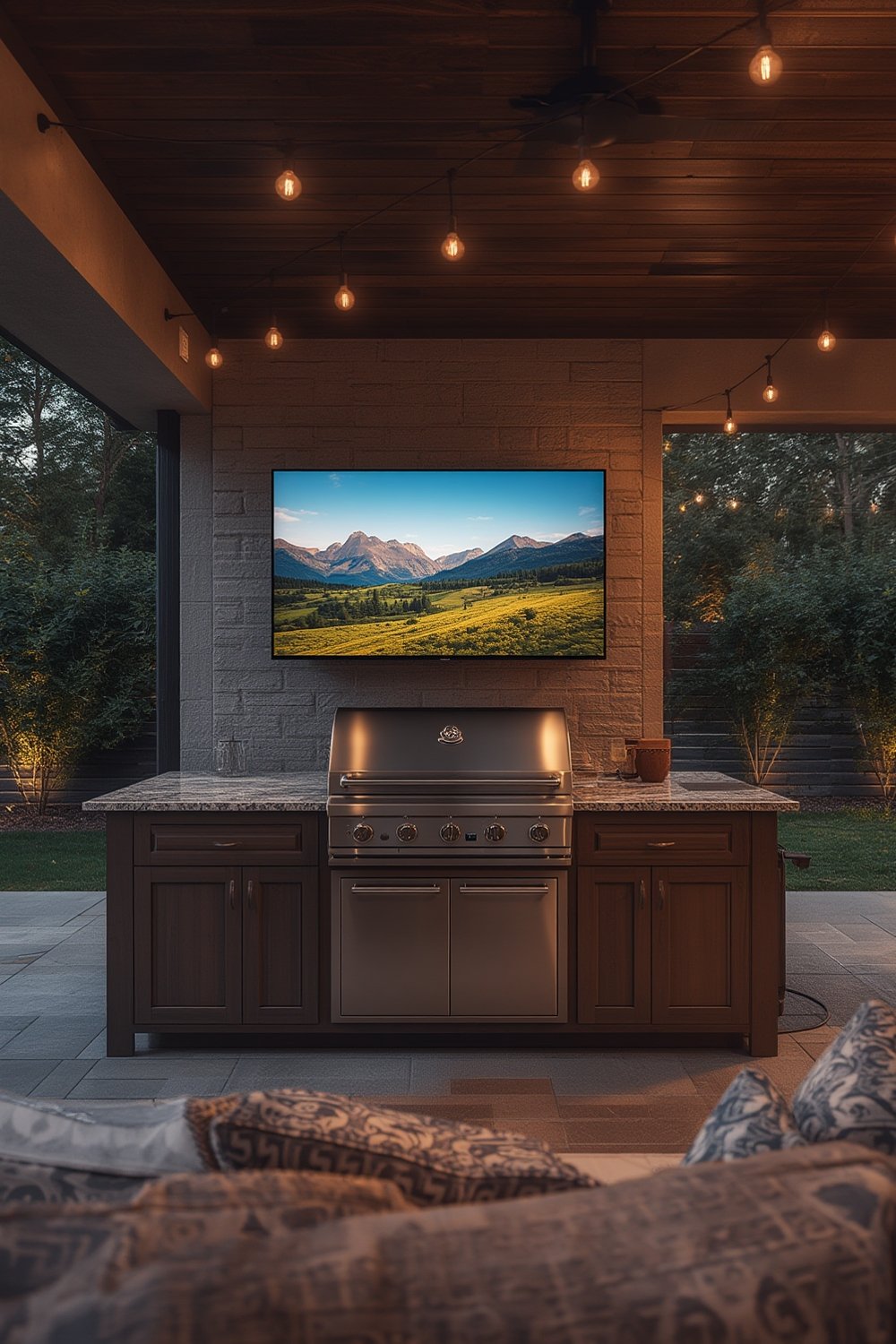
You’ll also get extra features unavailable on indoor TVs: advanced anti-glare coatings for sunny patios, all-season temperature controls, and extra-rugged cabinets that simply don’t exist on standard electronics. If you want an outdoor kitchen waterproof TV that really delivers, these points are non-negotiable.
Before choosing a model, assess your space. Covered or open patios, exposure to storms, and sunlight hours should all influence your decision. For patio storage, see patio furniture care tips for protection ideas that overlap with electronics.
Step-by-Step Guide: How to Set Up the Perfect Outdoor Waterproof TV
A perfect outdoor kitchen waterproof TV setup goes way beyond the screen. Here’s how to do it for real, with minimal risk of breakdown or regret.
- Measure and Assess Exposure
- Determine direct sunlight hours and likely wind or rain corridors.
- Measure your cabinetry or wall space, factoring in ventilation and cable routing.
- Choose the TV or Enclosure
- Select a screen size (55-70” dominates 2024 sales), but don’t oversize for your space.
- Prioritize maximum brightness and an IP66—or similar—protection rating for water and dust.
- Consider a true outdoor TV over a weatherproof enclosure; the latter can be less bright and harder to service.
- Check Electrical and Safety Requirements
- Hire a licensed electrician to ensure GFCI outlets and ground-fault protections for outdoor use.
- Use only outdoor-rated extension cables and cords. Sketch a cable path—don’t run wires near BBQs or water lines.
- Select and Mount the Bracket
- Look for marine-grade or stainless steel mount rated for your TV weight and size.
- Double-check supports—stucco, brick, and wood all need unique anchors. Level and secure for wind safety.
- Weatherproof the Cables and Connections
- Use outdoor silicone grommets and junction boxes to shield connections from water.
- Apply water-resistant tape at any vulnerable spot.
- Test, Tweak, and Adjust Settings
- Test brightness at midday. Adjust anti-glare and color profiles for real outdoor lighting.
- Connect to WiFi and streaming apps before closing up cabinetry/enclosures.
- Schedule Maintenance and Storage
- Plan annual cleaning, cable checks, and cover or shelter if severe storms or winter are common.
- If removable, store TV inside when temperatures hit extremes (see next section for common pitfalls).
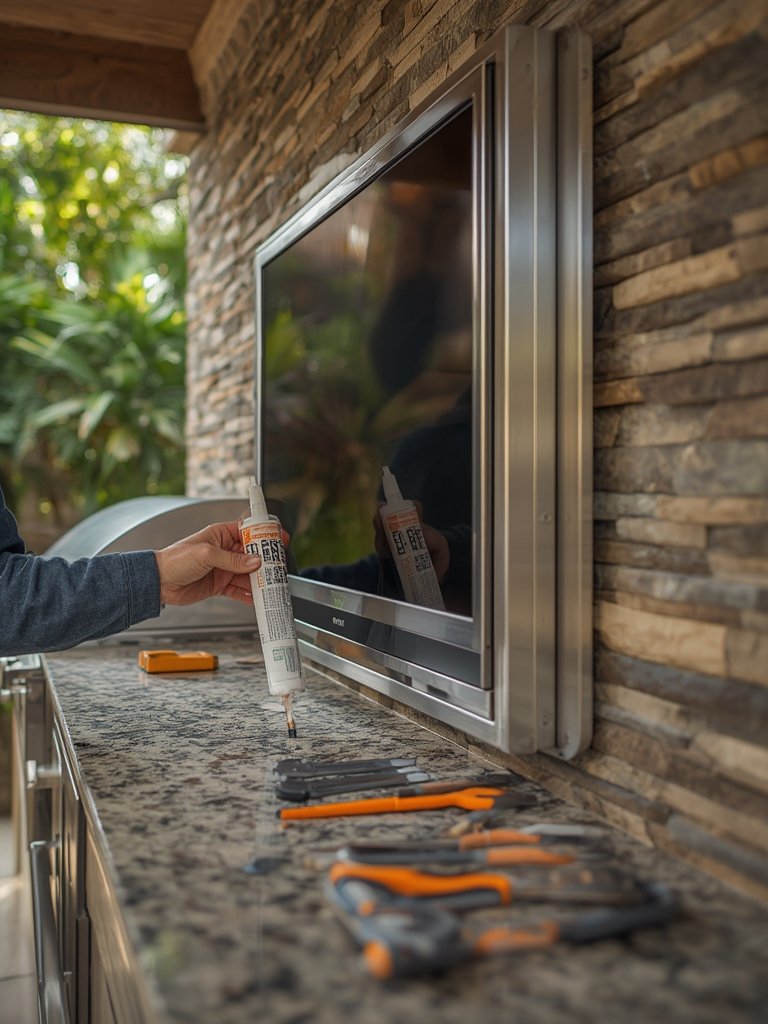
If integrating into custom cabinetry, choose a vented design—re-circulating hot air is a top cause of outdoor TV failure. For cabinetry ideas, consider referencing fluted kitchen cabinet options that deliver style and airflow.
Finish by checking compatibility with other patio tech (outdoor audio, lighting, etc.) for a seamless entertainment space. For integrated outdoor living inspiration, don’t miss these patio decor ideas.
Advanced Analysis & Common Pitfalls
Even the best outdoor kitchen waterproof TV can underperform—or fail—if you overlook these practical realities:
- Maintenance Often Overlooked: Most guides fail to mention that dust, pollen, and insects can clog vents or stick to the screen. Quarterly wipe-downs with a damp microfiber cloth are a must.
- Cabinet Compatibility: Outdoor TVs often require more space and airflow than standard cabinets allow. Never wedge a TV into a tight space—consult with the cabinet maker, especially if you’re upgrading cabinetry like scullery kitchen designs for outdoor use.
- Seasonal Storage Ignored: Leaving your outdoor kitchen waterproof TV exposed all winter—even in a mild climate—shortens its lifespan. Removable TV brackets or custom covers are cheap insurance.
- Cable & Connection Degradation: Outdoor humidity and summer storms can corrode unprotected cables. Use only marine-grade or UV-resistant options, as seen in garage and outdoor project guides.
| Feature | Outdoor Kitchen Waterproof TV | Weatherproof Enclosure + Indoor TV |
|---|---|---|
| Average Brightness | 1000-1500 nits (optimised for sunlight) | Typically <500 nits (may struggle in bright areas) |
| Protection Rating | IP65 – IP66, all-weather build | Varies by case, often lower; not all seal tightly |
| Lifespan Expectancy | 5+ years when installed/maintained right | 1–3 years; more frequent failures due to heat/moisture |
| Cost (2024 est.) | $1,200 – $5,000+ (TV only) | $800 – $2,500 (case + indoor TV) |
| Warranty | Outdoor-specific, covers typical weather | Usually voided if used outdoors |
For more ways to make compact outdoor spaces inviting and organized, check out pet essentials for small homes and space-saving furniture strategies.
Conclusion
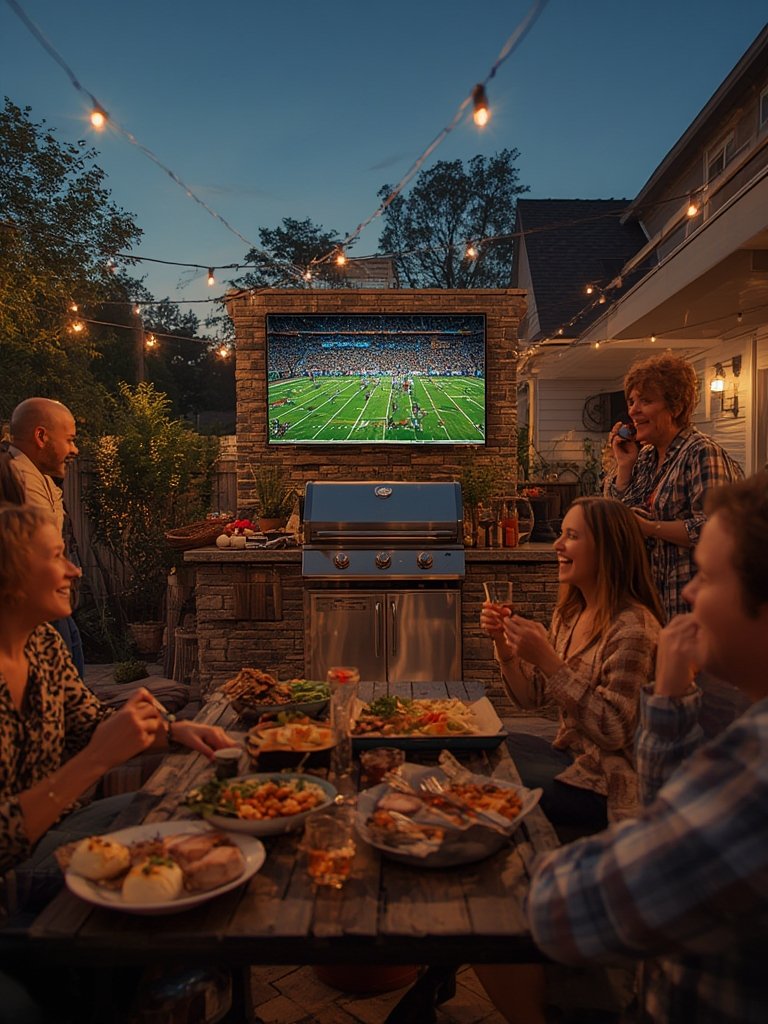
An outdoor kitchen waterproof TV, when chosen and installed with care, brings a whole new level of enjoyment to any patio or backyard. Real-life success comes from focusing on high-brightness displays, reliable weatherproofing, and a realistic ongoing care plan. Don’t overlook seasonal storage and proper mounting—this prevents costly mistakes and extends your investment’s lifespan.
If you’re ready to transform your outdoor space, start mapping your project now. A purposeful approach turns any covered patio or outdoor kitchen into a true entertainment destination. Browse more backyard landscaping ideas or affordable home transformations for inspiration—and make your outdoor kitchen waterproof TV the envy of the neighborhood.
FAQ
Do I need a special mount for an outdoor kitchen waterproof TV?
Yes, always use a marine-grade or stainless steel mount with outdoor corrosion resistance. Indoor mounts may rust or fail when exposed to humidity or rain.
Can I use an indoor TV inside a weatherproof enclosure outdoors?
You can, but expect lower brightness and shorter lifespan. Most indoor TVs will still void their warranty if used outdoors, even in a weatherproof enclosure.
How often should I clean or maintain my outdoor kitchen waterproof TV?
Quarterly cleaning and regular cable checks are ideal. Dust and bugs collect faster outdoors—check vents and screens every few months.
Should I bring my outdoor kitchen waterproof TV indoors in winter?
If your region faces extreme cold, heavy storms, or long periods of inactivity, it’s smart to remove and store the TV indoors or use a heavy-duty weather cover.
What’s the most important feature for all-weather viewing?
High brightness (1000+ nits) and true weatherproofing (IP65+) are critical. Anti-glare coatings and temperature controls are vital for day-to-day usability.