


Table of Contents
Patio Furniture Care Essentials: How to Protect and Extend the Life of Your Outdoor Furniture
Patio furniture care essentials are the foundation of a beautiful, comfortable, and long-lasting outdoor living space. While outdoor furniture is designed to handle exposure, constant sun, rain, dirt, pollen, and temperature fluctuations can quickly degrade materials if they are not properly maintained.
From faded cushions and rusted frames to warped wood and cracked finishes, neglecting basic care can shorten the lifespan of even premium furniture. Fortunately, a consistent maintenance routine can preserve both appearance and structural integrity—saving money and frustration over time.
In this comprehensive guide, you’ll learn how to clean, protect, repair, and store patio furniture correctly. Whether your setup includes wood, metal, wicker, or plastic, these patio furniture care essentials will help you enjoy your outdoor space season after season.
What Are Patio Furniture Care Essentials & Why They Matter
Patio furniture care essentials refer to the ongoing practices required to maintain outdoor furniture in good condition. These include proper cleaning, weather protection, surface treatments, repairs, and seasonal storage strategies.
Outdoor furniture faces harsher conditions than indoor pieces. UV rays fade finishes, moisture leads to rust or mold, and temperature swings cause materials to expand and contract. Without regular care, furniture becomes uncomfortable, unsafe, and visually unappealing.
By following essential care practices, you:
- Prevent long-term damage
- Maintain comfort and usability
- Protect structural strength
- Preserve visual appeal
- Extend furniture lifespan significantly
Good care doesn’t require expensive products—just consistency, material awareness, and smart protection strategies.
Benefits of Following Patio Furniture Care Essentials
1. Extended Furniture Lifespan
Routine maintenance can double or even triple the usable life of outdoor furniture.
2. Improved Safety and Comfort
Tight joints, intact finishes, and clean surfaces reduce wobbling, splinters, and sharp edges.
3. Cost Savings Over Time
Preventive care is far cheaper than frequent replacement.
4. Better Appearance
Clean, protected furniture elevates the entire outdoor space.
5. Seasonal Readiness
Well-maintained furniture is always ready for entertaining or relaxing.
Understanding Patio Furniture Materials and Their Care Needs
Wooden Patio Furniture
Wood furniture offers warmth and timeless appeal, but it requires ongoing attention.
Common outdoor woods include:
- Teak
- Eucalyptus
- Acacia
- Cedar
While hardwoods contain natural oils, they still benefit from sealants or regular oiling to prevent cracking, fading, and moisture damage. Without protection, wood may dry out or develop uneven discoloration.
Care essentials for wood furniture:
- Clean gently with mild soap and water
- Avoid pressure washing
- Apply oil or sealant annually
- Sand lightly before re-coating
- Elevate legs to prevent ground moisture absorption
Left untreated, wood may develop a gray patina—attractive to some, but preventable with proper care.
Metal Patio Furniture
Metal furniture is durable and modern but varies greatly by type.
Common metals include:
- Aluminum (lightweight and rust-resistant)
- Steel (strong but prone to corrosion)
- Wrought iron (heavy and long-lasting)
Even rust-resistant metals benefit from routine inspection. Scratches or chipped finishes expose metal to moisture.
Key protection methods include:
- Washing with mild soap
- Drying immediately after cleaning
- Spot-treating chips with rust-inhibiting primers and outdoor-grade paint
Ignoring small rust spots allows corrosion to spread quickly.
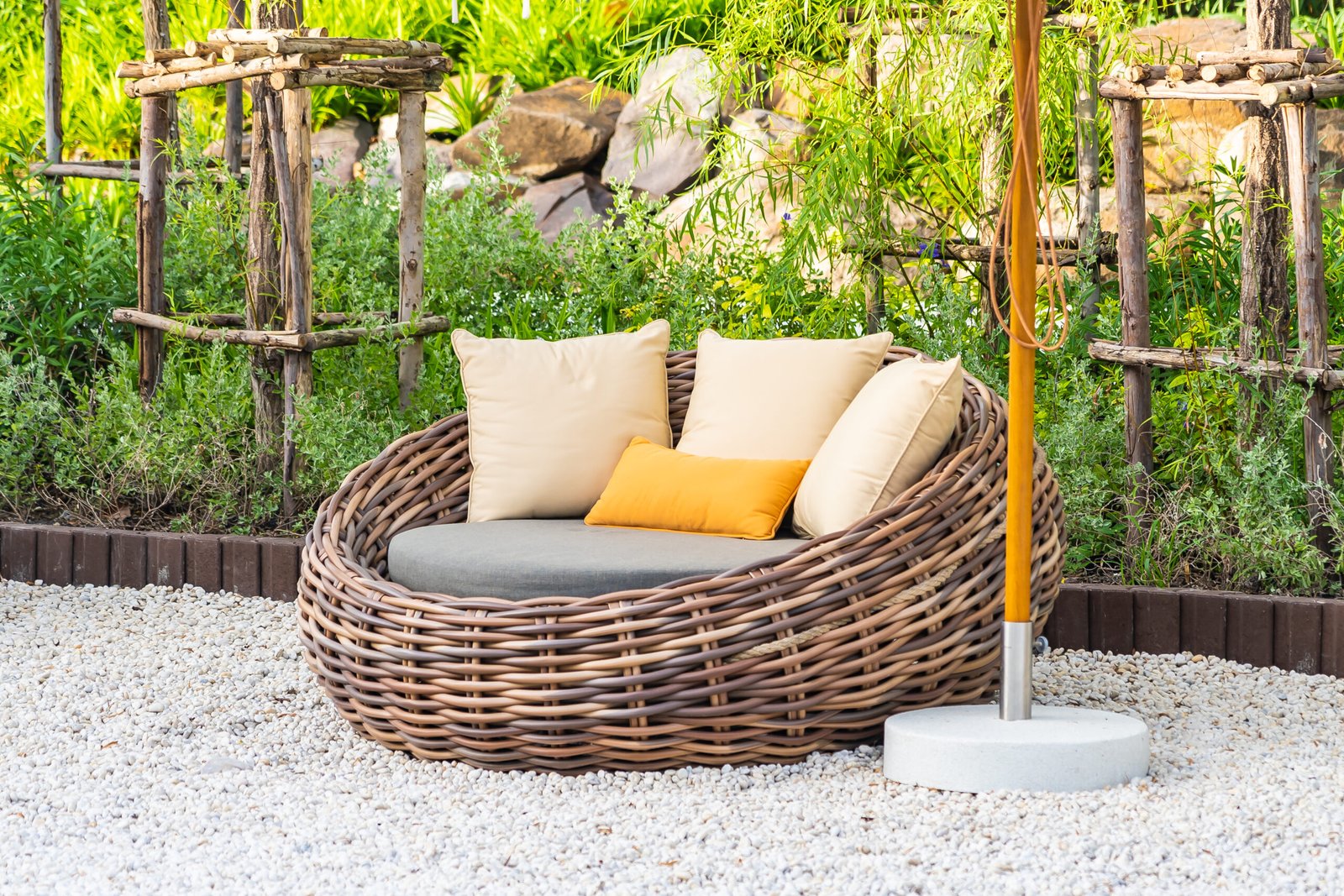
Wicker and Resin Furniture
Natural wicker provides a relaxed, organic look but performs best in covered areas. Traditional wicker is less resistant to moisture, making it vulnerable to mold and warping.
Synthetic resin wicker is designed for outdoor use and resists:
- UV exposure
- Moisture
- Mildew
Care essentials include:
- Vacuuming debris regularly
- Cleaning with soft brushes
- Avoiding excessive water pooling
- Using covers during rainstorms
Always ensure wicker furniture dries fully after cleaning.
Plastic Patio Furniture
Plastic furniture is lightweight, affordable, and water-resistant, but it can fade or become brittle without care.
Best practices include:
- Gentle washing with soap and water
- Avoiding abrasive cleaners
- Using UV-protectant sprays
- Storing away from direct sun when possible
Recycled plastic furniture often offers enhanced durability and color retention.
How to Clean Patio Furniture Properly
Cleaning is the cornerstone of patio furniture care essentials. Dirt, pollen, and grime accelerate wear when left untreated.
General Cleaning Guidelines
- Clean every 1–2 weeks during heavy use
- Use non-abrasive cleaners only
- Avoid bleach unless manufacturer-approved
- Rinse thoroughly
- Dry completely before covering or storing
Material-Specific Cleaning Tips
Wood:
Use a soft brush and mild soap. Rinse lightly and dry fully before oiling.
Metal:
Wash with soapy water, dry immediately, and inspect for chips or rust.
Plastic:
Dish soap works well; baking soda removes stains safely.
Cushions:
Vacuum regularly. Wash removable covers according to label instructions and air-dry fully.
Routine cleaning prevents permanent stains and surface breakdown.
Protecting Patio Furniture From Weather Damage
Weather-Resistant Covers Are Essential
Weather-resistant covers are one of the most effective protective tools available. Choose covers that are:
- Waterproof yet breathable
- Properly fitted
- UV-resistant
Poorly fitting covers trap moisture, causing mold and corrosion.
Applying Protective Treatments
Different materials require different protective solutions.
- Wood: Sealants or oils once per year
- Metal: Touch-up paint and rust inhibitors
- Plastic & resin: UV-protective sprays
Protective treatments act as barriers against moisture, sun damage, and wear.
Seasonal Exposure Management
- Move furniture indoors during storms
- Elevate legs off damp surfaces
- Rotate furniture to balance sun exposure
- Use shade structures when possible
Small adjustments reduce cumulative damage significantly.
Seasonal Storage Solutions That Work
Seasonal storage solutions are critical in colder or wetter climates.
Best Storage Practices
- Clean and dry furniture thoroughly
- Store indoors when possible
- Use breathable covers for outdoor storage
- Remove cushions and store separately
- Elevate furniture off concrete floors
For limited indoor space, disassemble larger pieces and label hardware for easy reassembly.
Repair and Restoration Essentials
Metal Furniture Restoration
- Sand rusted areas
- Apply rust-inhibiting primer
- Finish with outdoor-grade paint
This prevents corrosion from spreading.
Wood Furniture Repair
- Sand scratches along the grain
- Apply matching stain or sealant
- Replace rusted screws with stainless steel hardware
Plastic and Resin Touch-Ups
- Buff scratches with plastic polish
- Use restoration sprays to revive faded color
Minor repairs extend usability dramatically.
Common Patio Furniture Care Mistakes to Avoid
- Using harsh or abrasive cleaners
- Leaving furniture uncovered year-round
- Storing furniture while damp
- Ignoring chipped paint or rust
- Wrapping furniture in non-breathable plastic
Avoiding these mistakes protects your investment long-term.
Expert Tips for Long-Lasting Outdoor Furniture
- Rotate furniture seasonally
- Tighten bolts twice per season
- Store cushions indoors when not in use
- Match cleaners to material type
- Address damage immediately
Consistency matters more than intensity.
Patio Furniture Care Checklist (Quick Reference)
- Clean regularly with non-abrasive products
- Apply sealants or protective coatings annually
- Use weather-resistant covers
- Inspect for damage monthly
- Store properly during off-season
❓ FAQs About Patio Furniture Care Essentials
What are the most important patio furniture care essentials?
Cleaning, protection from weather, prompt repairs, and proper storage.
How often should patio furniture be cleaned?
Every 1–2 weeks during heavy use, plus seasonal deep cleaning.
Can patio furniture stay outside all year?
Some can, but covers and seasonal storage are highly recommended.
What prevents rust best on metal furniture?
Drying thoroughly and using rust-inhibiting primers and paint.
Should cushions always be stored indoors?
Yes, especially during rain or winter months.
✅ Conclusion
Following patio furniture care essentials is the key to protecting your outdoor furniture from wear, weather, and premature aging. With regular cleaning, smart protection, timely repairs, and effective storage strategies, your patio furniture can remain comfortable, safe, and visually appealing for many years.
Consistent care doesn’t just preserve furniture—it preserves the enjoyment of your outdoor living space.